Challenge in Assembling Silicone Tube over Metal Tube
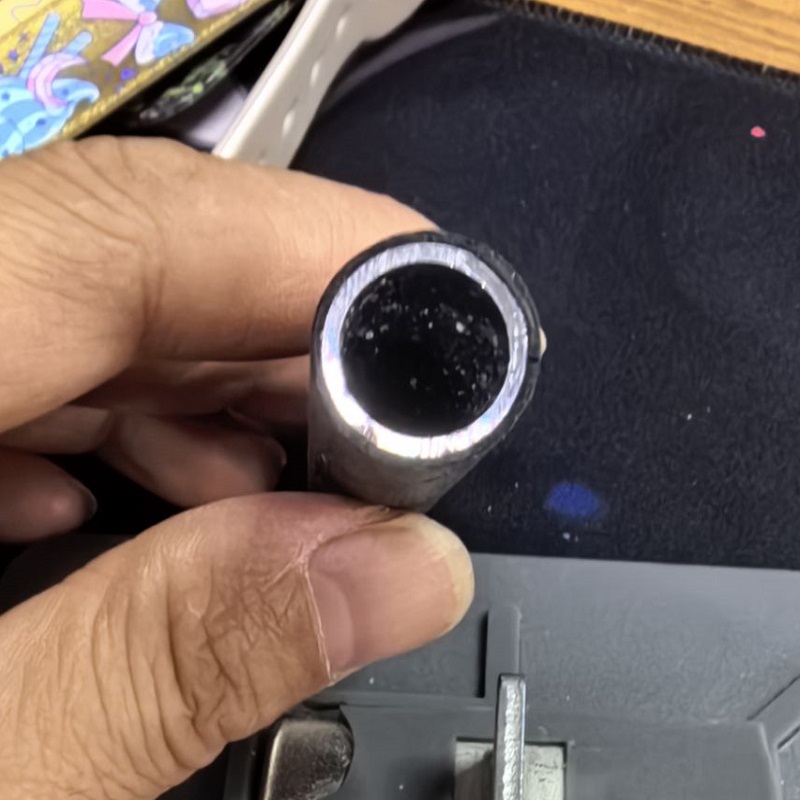
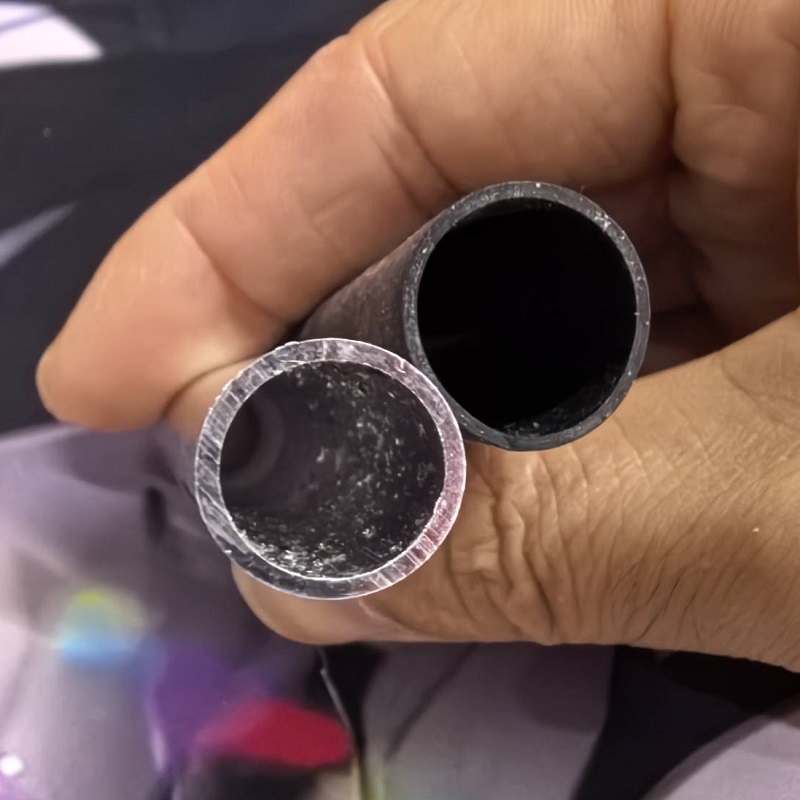
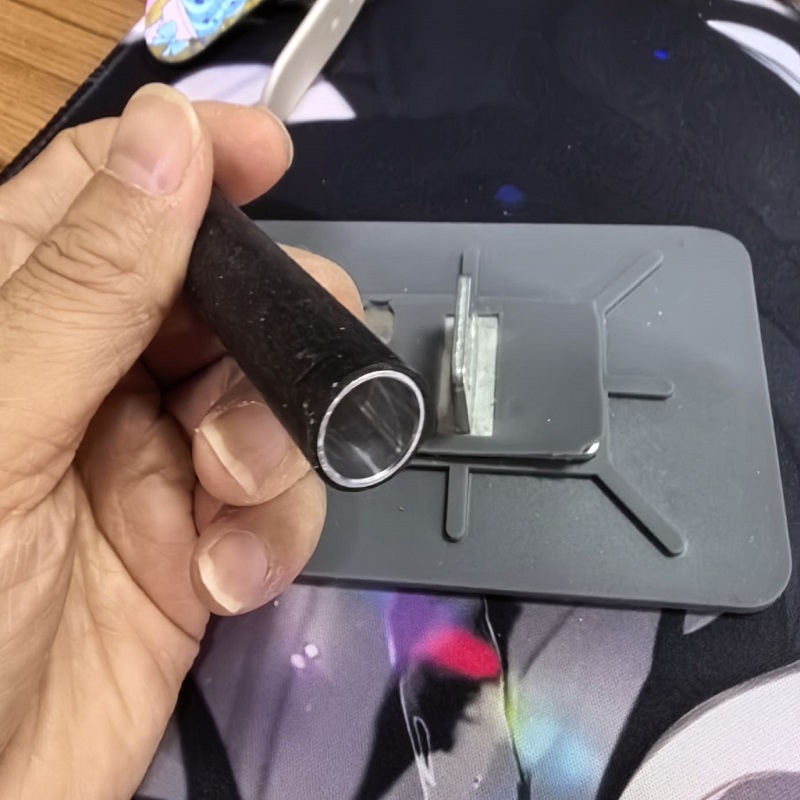
We received a sample from a customer, intended for use in a mouse, which consists of a silicone tube sleeved over a metal tube. This sample is a short section.
The dimensions are approximately 15mm in diameter and 300mm in length. While this length is not considered long for a silicone tube itself, sleeving the silicone tube over an aluminum tube presents a significant challenge. We are preparing to quote for the silicone tube separately, and the labor cost for assembling it onto the metal tube will require an additional evaluation. (Chicarubber)
Silicone products inherently possess anti-slip properties, making it a major challenge to slide the silicone sleeve smoothly and snugly along the aluminum tube. The silicone tube needs to be expanded before being sleeved onto the aluminum tube to make the process easier. Attempting to sleeve the original-sized silicone tube directly is difficult and impractical.
I. Core Difficulties Analysis
- Excessive Friction: Silicone’s soft texture generates high frictional resistance when in contact with the metal surface, making insertion difficult and even causing a “rolling-up” phenomenon.
- Air Entrapment: As the silicone tube is sleeved onto the tube, air trapped between the two cannot escape promptly, creating an air cushion effect. This generates back pressure, preventing the assembly from seating fully.
- Silicone Deformation: If force is applied incorrectly, the silicone tube is highly prone to twisting, stretching, or local deformation. This leads to unsatisfactory appearance, potential functional impact, or even damage to the silicone component.
- Misalignment: In manual or semi-automatic operations, even a slight initial misalignment will exacerbate all the problems mentioned above.
II. Solutions (From Simple to Complex, Low-Cost to High-Cost)
A. Process Assistance and Lubrication
This is the most straightforward and lowest-cost approach.
- Use of Lubricants:
· Medium: Use pure water, diluted soapy water, or alcohol as lubricants. They effectively reduce friction and will evaporate naturally afterward, leaving no residue.
· Note: Avoid using oily lubricants to prevent attracting dust or interfering with subsequent processes like adhesion or coating on the silicone.
· Method: Apply the lubricant to the outer wall of the metal tube, or briefly immerse/coat the inner wall of the silicone tube. - Temperature Assistance:
· Principle: Utilizes the thermal expansion and contraction principle. Silicone typically has a much higher coefficient of thermal expansion than metal.
· Method: Soak the silicone tube in warm water (e.g., 60-70°C) to cause it to heat up and expand slightly, temporarily increasing its inner diameter. This makes it easier to sleeve on. After assembly, as the silicone cools and contracts, the fit with the metal tube becomes tighter.
B. Jig and Fixture Design
This is key for ensuring efficiency, consistency, and yield rate, suitable for mass production.
- Tapered Guide / Lead-in Sleeve:
· Design a tapered guide sleeve (can be made of plastic or metal) fixed at the entrance end of the metal tube. This taper can gently “guide” and “expand” the silicone tube onto the correct path, preventing initial rolling-up. - Vacuum Assistance:
· This is a highly effective solution for the air entrapment problem.
· Method: Pre-drill one or several tiny vent holes in the metal tube. During assembly, apply a vacuum through these holes to evacuate the air between the silicone and metal tubes. Atmospheric pressure will uniformly “press” the silicone tube against the outer wall of the metal tube and help slide it into position automatically. This method is efficient, reliable, and non-damaging to the silicone. - Mechanical Pusher Design:
· Use a constant-speed pneumatic or hydraulic pusher instead of manual force to perform the pushing action. This ensures even force application and a straight path, avoiding skewing and deformation caused by unstable human force.
C. Design Optimization
If the product design is still in progress, optimization can be done at the source.Chamfered End on Metal Tube:
· This is the most basic and essential design requirement. The end of the metal tube must be machined with a sufficiently large and smooth radial chamfer or C-chamfer (recommended 30°-45°) to create a perfect lead-in surface.
Flared Lip Design on Silicone Tube: (Chicarubber)
· Design an outward-flared “lip” at the end of the silicone tube. When this lip contacts the chamfer of the metal tube, it is more easily guided to open up rather than being crushed flat.
Challenge in Assembling Silicone Tube over Metal Tube
If you need to customize silicone products, please contact us at chicarubber