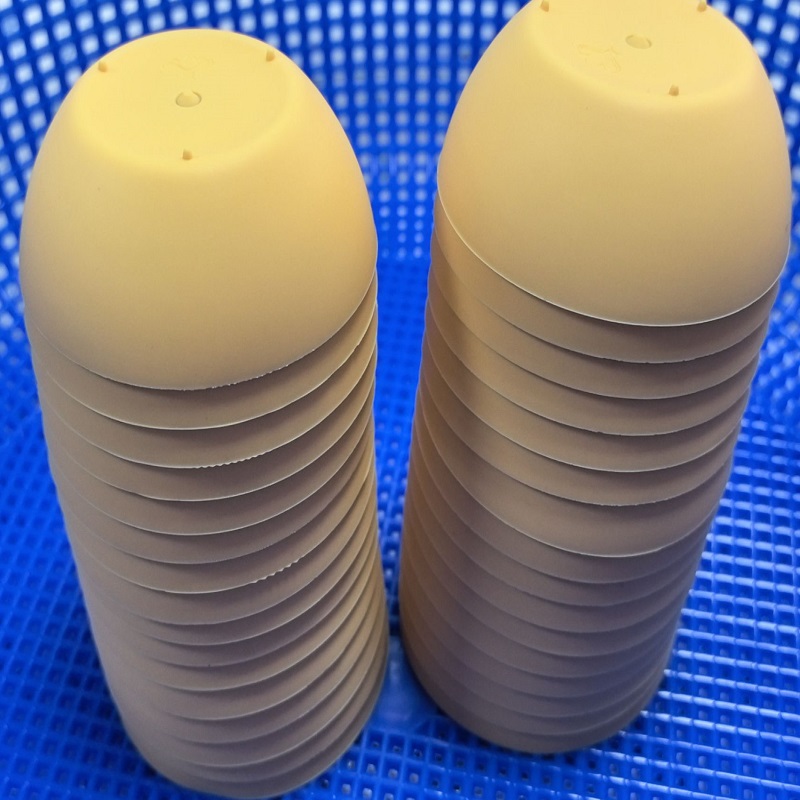
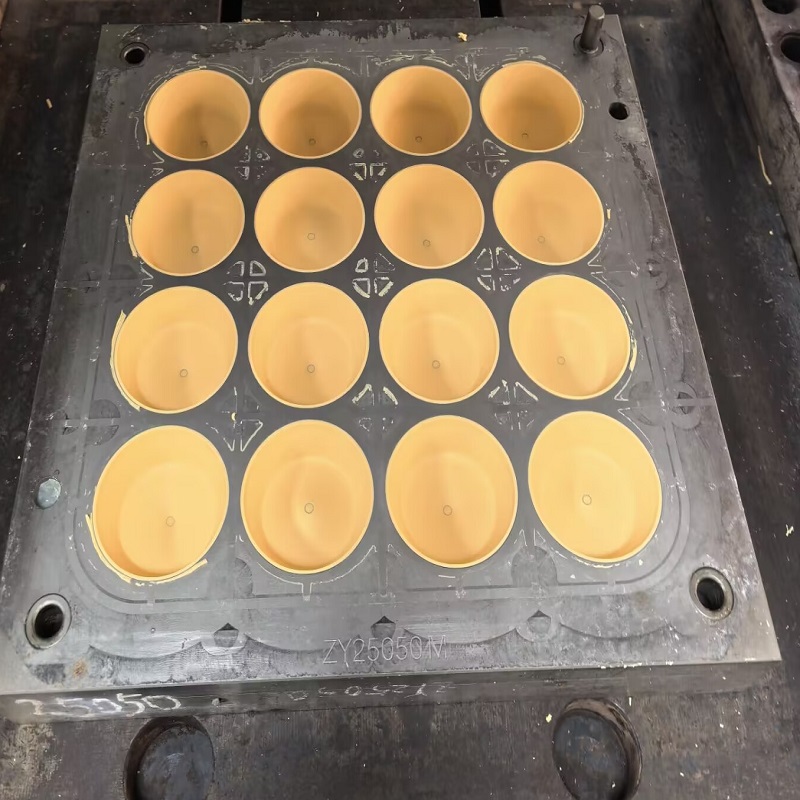
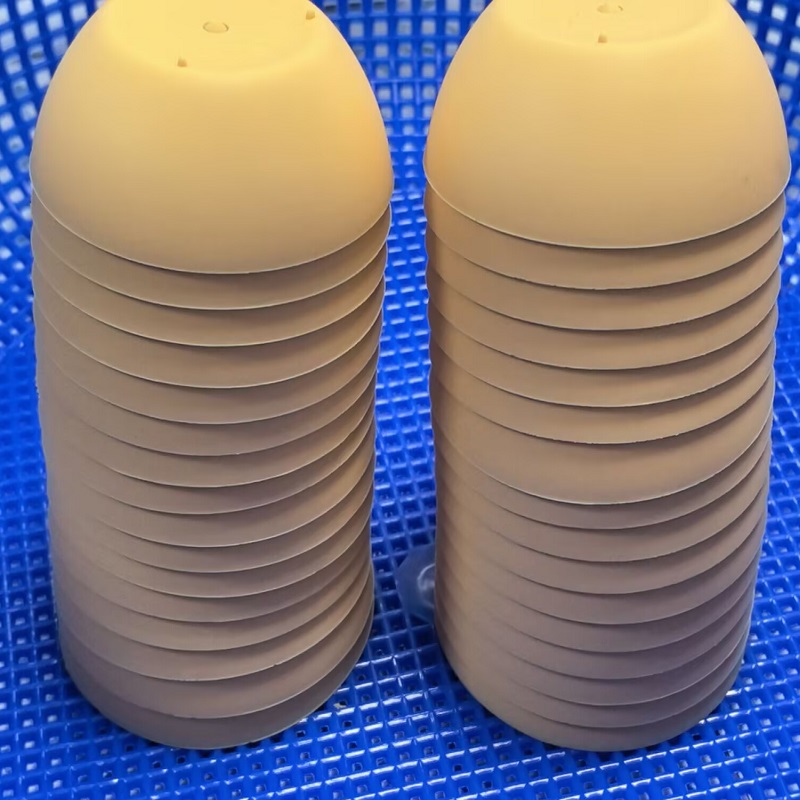
Addressing Flash in High-Requirement Silicone Products
We currently face a manufacturing challenge with a client’s high-precision product where requirements exceed the capabilities of standard solid silicone molding. The specific issue involves persistent micro-flash—a fine, felt-like burr measuring under 0.1mm along product edges. While minimal, this defect is unacceptable for the client’s stringent aesthetic standards. (Chicarubber)
The client has conducted multiple trials, testing different material batches and adjusting charge weights, while firmly maintaining two non-negotiable parameters: 70 Shore A hardness and specific color/appearance requirements. This creates a significant technical constraint since higher durometer materials inherently demonstrate poorer flow characteristics, exacerbating flash formation.
Process Limitations Analysis
In solid silicone molding,material is compressed within the mold cavity under high pressure, forcing flow that fills the tool geometry. Excess material inevitably escapes across the parting line into overflow grooves. Subsequent manual trimming leaves visible witness lines and occasional jagged edges—the fundamental challenge we’re addressing.
Our current process already implements meticulous controls:
· Individual material dosing for precise weight control
· Minimal flash generation through optimized charge volume
· Manual removal of adhered flash using air guns
Despite these measures, the sub-0.1mm fibrous burr persists. Experimental addition of fumed silica slightly improved flow but reduced hardness by 5 points—an unacceptable compromise. Multiple sample iterations have confirmed that the solid molding process cannot eliminate this microscopic flash while maintaining all specifications.
Technical Recommendations
We’ve presented two forward paths:
1. Mold Modification and Parameter Re-optimization
Comprehensive tool refinement could marginally improve results,though complete flash elimination remains unlikely given material constraints. This approach requires additional engineering investment with uncertain outcomes.
2. Transition to Liquid Silicone Rubber (LSR) Molding
This represents the technically superior solution.LSR’s low-viscosity characteristics enable clean cavity filling at lower pressures, significantly reducing parting line penetration. Combined with cold runner systems that eliminate traditional flash webs, LSR molding can deliver the required aesthetic perfection while maintaining 70 Shore A hardness. (Chicarubber)
The initial investment in LSR tooling and equipment would be offset by eliminated secondary operations, higher consistency, and guaranteed quality compliance. For clients uncompromising on visual perfection, this technological transition represents the most viable long-term solution.
Addressing Flash in High-Requirement Silicone Products
If you need to customize silicone products, please contact us at chicarubber