Key Considerations for Molding a Tri-Color Silicone Crab Teether
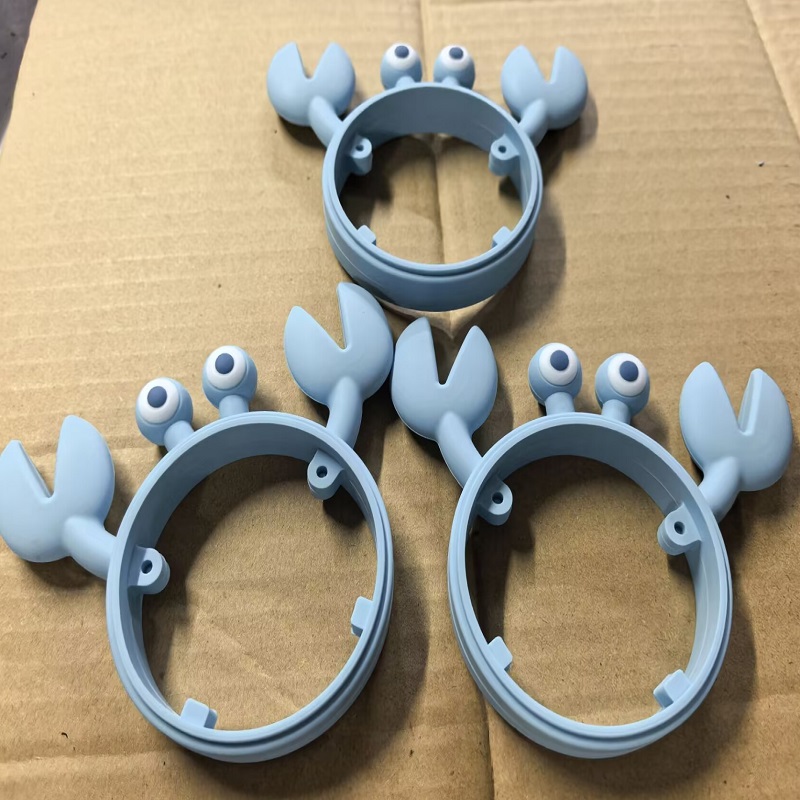
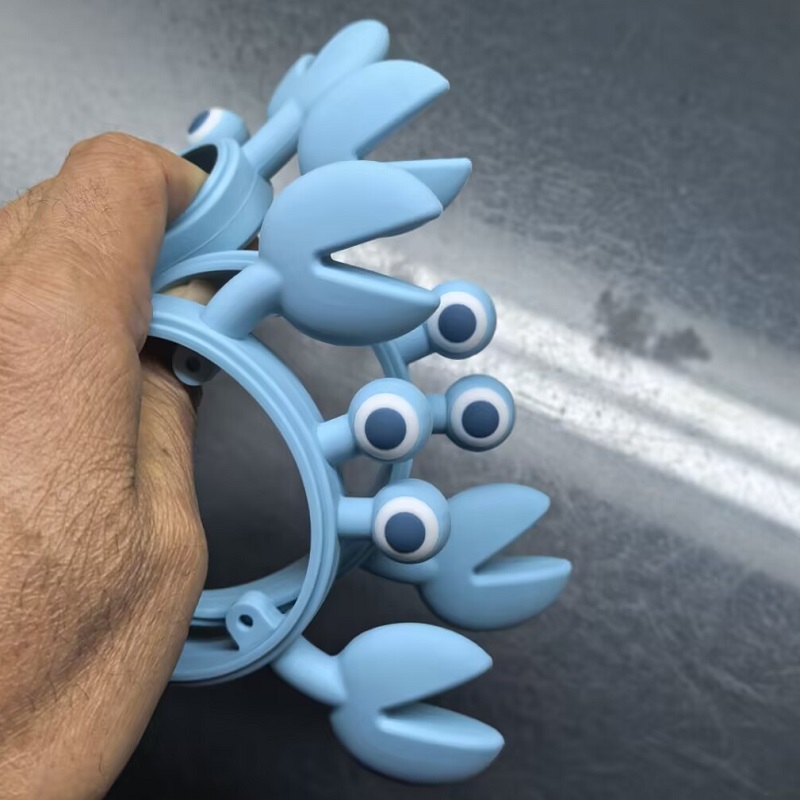
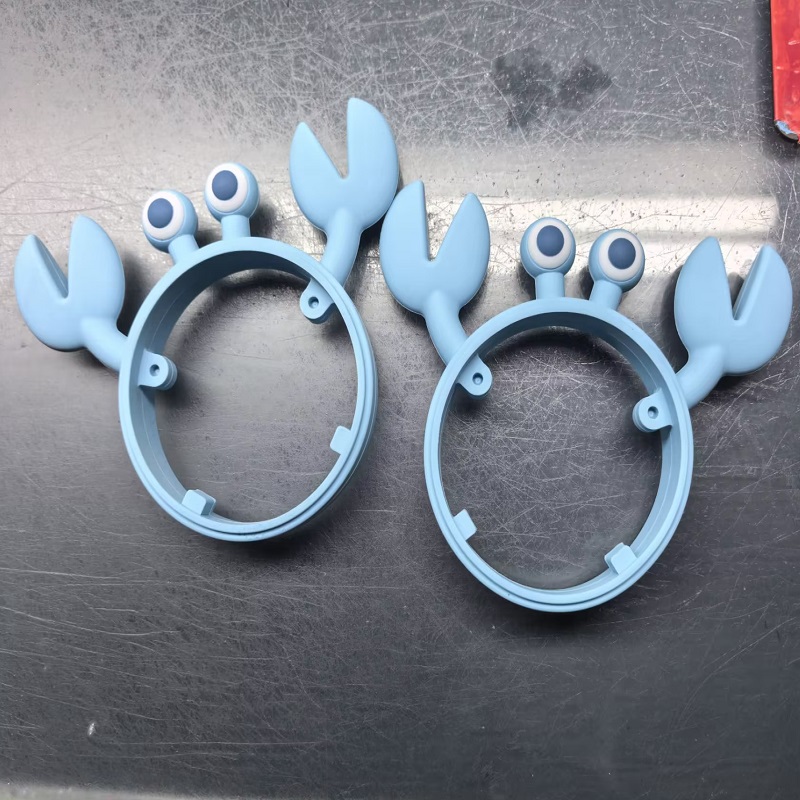
We have a long-term client who has requested the production of a silicone crab teether, a product designed for infants that must meet food-grade material standards. The toy features three colors: two for the eyes and one for the body. (Chicarubber)
Previously, the client received samples from another supplier, which were produced as separate parts—requiring assembly and adhesive bonding. This approach poses significant safety risks for infants, as small components could become loose if the adhesive fails. Moreover, the glue used was not food-grade, raising potential health concerns.
The client provided these samples for color matching. Instead of multi-part assembly, we propose manufacturing the product as a single, integrated piece through multi-material overmolding. Below, we outline the key production considerations to ensure a safe, durable, and visually consistent outcome.
Production Process & Critical Controls
1. Layered Molding of the Eyes The eyes are produced in two stages: the blue pupil is molded first, then placed into another mold for overmolding with the white base. This “eye sub-assembly” is later positioned into the main cavity for the final body overmolding.
· Mold Design: A retaining wall must be incorporated around the eye sockets in the main mold. This prevents displacement of the eye inserts during the final molding due to silicone flow pressure.
· Insert Placement: During production, operators must securely position and flatten the eye inserts in the mold cavity before placing the body-color silicone material on top. This step helps stabilize the inserts before closing the mold.
2. Material Hardness for Inserts The initial eye inserts (blue pupils) should be formulated to a higher hardness—around Shore A 70. A firmer insert maintains its shape and resists shifting under injection pressure, ensuring precise positioning and a clean color boundary.
3. Silicone Flash Groove Design The parting line groove should be designed with a width of at least 0.6 mm, ideally around 1 mm. If the mold cavity is deeper, the groove may need to be wider to prevent collapse or deformation during demolding.
4. Post-Processing & Quality Assurance · After the eye inserts are molded, any flash or excess material must be thoroughly trimmed to ensure smooth edges. This allows for accurate placement in the final molding stage.
· Each production cycle should include a check for residual silicone inside the mold to prevent defects in subsequent shots.
· Finished products must be inspected for completeness of fill, absence of contamination, and overall integrity before approval. (Chicarubber)
Conclusion By adopting integrated multi-color molding, we eliminate the need for adhesives and loose parts, directly addressing infant safety concerns while ensuring all materials remain food-grade. Through careful mold design, process control, and strict quality checks, we can deliver a compliant, reliable, and child-safe product that meets both regulatory standards and our client’s expectations
Key Considerations for Molding a Tri-Color Silicone Crab Teether
If you need to customize silicone products, please contact us at chicarubber